The Benazir Income Support Program (BISP) is one of the largest social welfare programs in Pakistan. It was launched to support poor and deserving families by providing financial assistance to help them manage their daily expenses. Millions of households across the country benefit from this program every year. Benazir Income Support Program (BISP) New Update 2026
In 2026, the government of Pakistan has introduced several new updates in the Benazir Income Support Program to improve transparency, increase financial support, and make the registration process easier for eligible families. These updates are especially important for low-income families who rely on this assistance to cover essential needs such as food, education, and healthcare.
This article explains the latest updates of BISP in 2026, including the new payment amount, eligibility criteria, registration process, and methods to check payment status.
Overview of the Benazir Income Support Program
The Benazir Income Support Program was introduced to reduce poverty and provide financial protection to low-income households in Pakistan. The main goal of the program is to empower women and help vulnerable families meet their basic needs.
Under this program, financial aid is usually provided to women of eligible households. The program also supports education, health, and skill development initiatives through various sub-programs such as Benazir Kafalat and Benazir Taleemi Wazaif.
Over the years, BISP has expanded significantly and now supports millions of families across the country. The government regularly updates the program to improve its effectiveness and reach more deserving people.
BISP New Payment Update 2026
One of the biggest updates in 2026 is the increase in the quarterly payment amount for beneficiaries. The government has raised the financial assistance to help families cope with rising inflation and living costs.

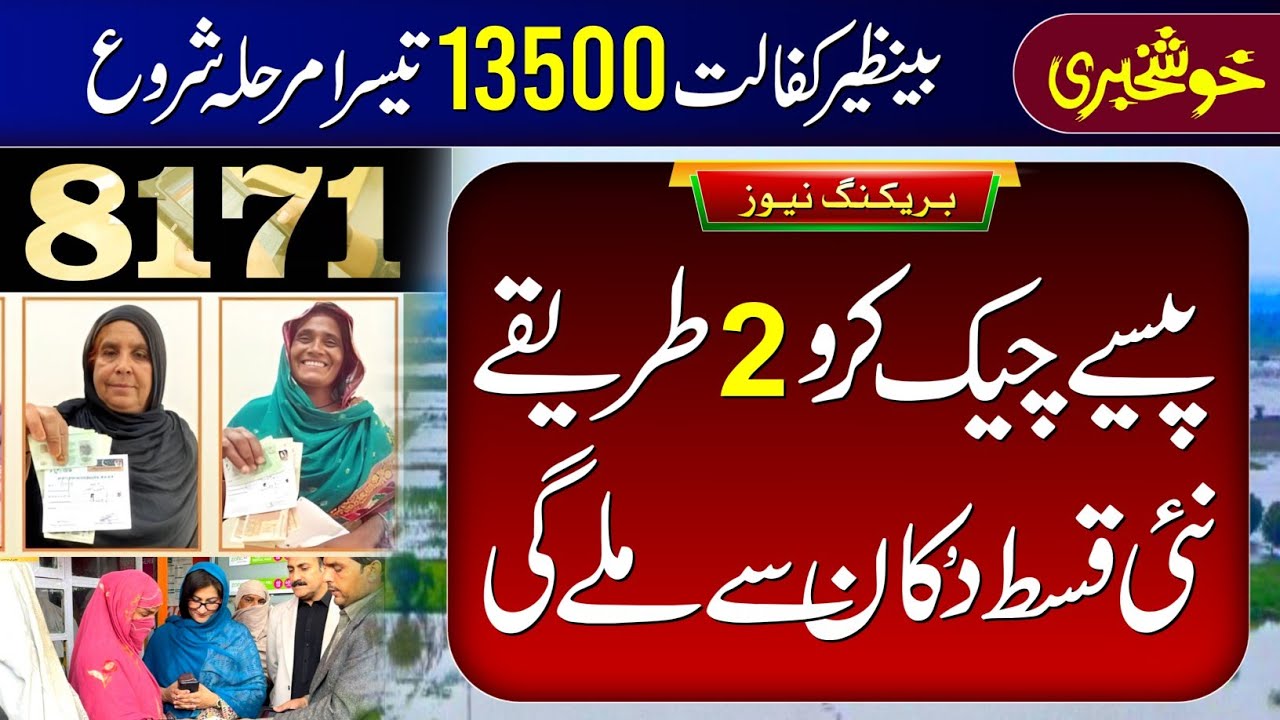
According to the latest updates, eligible beneficiaries under the Benazir Kafalat Program are receiving around 13,500 rupees as quarterly financial assistance. This payment is distributed every three months to registered families.
In some cases, reports also indicate that the installment for the January–March 2026 cycle may reach around 14,500 rupees depending on additional support and relief packages.
This increase in payment aims to provide stronger financial relief to poor families struggling with high food prices, utility bills, and other household expenses.
BISP Payment Schedule 2026
The BISP payments in 2026 are being distributed in phases across different districts of Pakistan. This system helps reduce overcrowding at payment centers and ensures smooth distribution.
The typical payment schedule includes:
Verification Phase
The verification process usually begins at the start of the payment cycle. Beneficiaries are verified through the National Socio-Economic Registry (NSER).
Payment Distribution
Payments normally start in the middle of the month and continue in phases across districts.
Late Verification Payments
Families who complete their verification later may receive payments in the following weeks.
Beneficiaries are informed through SMS from the official BISP number when their payment is ready for collection.
Eligibility Criteria for BISP 2026
Not every household qualifies for the Benazir Income Support Program. The government uses a strict eligibility system to ensure that financial assistance reaches deserving families.
The main eligibility requirements include:
The applicant must belong to a low-income household
The family should not have a stable government job
The household should not own significant property or large assets
The applicant must have a valid CNIC
Preference is given to women as the main beneficiaries
The eligibility of families is determined through the National Socio-Economic Registry survey, which collects detailed information about household income, employment status, and living conditions.
BISP Registration Process 2026
The registration process for the Benazir Income Support Program has become easier in recent years. Families who are not yet registered can apply through the official system.
The registration process generally includes the following steps:
Visit the nearest BISP office or registration center
Provide your CNIC and household information
Complete the NSER survey for verification
Wait for eligibility confirmation from BISP
Once approved, the applicant will start receiving payments according to the program schedule.
New registration opportunities are periodically opened so that more deserving families can join the program and receive financial assistance.
How to Check BISP Payment Status
Beneficiaries can easily check their payment status using the official BISP system. The government has introduced simple methods to help people verify their eligibility and payment information.
There are two main ways to check BISP payments:
SMS Method
Send your CNIC number to 8171. After sending the message, you will receive a reply confirming your eligibility and payment status.
Online Web Portal
You can visit the official BISP web portal and enter your CNIC number to check your payment details.
These methods make it easier for beneficiaries to stay updated about their payments without visiting government offices.
Payment Collection Methods
BISP payments are distributed through several secure channels to ensure transparency and convenience.
Common payment collection methods include:
Authorized BISP payment centers
Partner banks and ATMs
Mobile banking agents
BISP campsites in different districts
Beneficiaries must complete biometric verification using their thumb impression before receiving the payment. This step helps prevent fraud and ensures that funds reach the correct person.
New Digital and Banking Initiatives
In 2026, the government is also focusing on digital improvements in the BISP system. One major initiative is opening personal bank accounts for beneficiaries.
The goal of this step is to provide more transparency and allow women to receive payments directly into their accounts. This system also reduces dependency on intermediaries and helps prevent corruption or delays in payment distribution.
Digital wallets and banking partnerships are expected to make the payment process faster and more secure in the future.
Additional Programs Under BISP
The Benazir Income Support Program also operates several additional initiatives designed to improve education, health, and employment opportunities for poor families.
Some important programs include:
Benazir Taleemi Wazaif
This program provides financial support to families who send their children to school. It encourages education among low-income households.
Benazir Nashonuma Program
This initiative focuses on improving the health and nutrition of mothers and children.
Benazir Hunarmand Program
This program aims to provide vocational skills and training opportunities to eligible individuals so they can find better employment opportunities.
These programs are designed to reduce poverty not only through financial aid but also through education and skill development.
Importance of BISP for Pakistani Families
The Benazir Income Support Program plays a crucial role in Pakistan’s social protection system. Millions of families rely on this financial assistance to survive during difficult economic conditions.
The program helps families manage basic expenses such as food, school fees, medical treatment, and utility bills. It also provides financial independence to women, as payments are usually given directly to female members of the household.
By supporting vulnerable communities, BISP contributes to poverty reduction and social stability in the country.
Common Problems Faced by Beneficiaries
Although the program has helped many families, some beneficiaries still face challenges while receiving payments.
Common issues include:
Biometric verification failures
Delayed payment notifications
Incorrect eligibility status
Crowds at payment centers
To solve these problems, the government encourages beneficiaries to contact the official BISP helpline or visit the nearest BISP office for assistance.
Future Plans for BISP
The government plans to further expand the Benazir Income Support Program in the coming years. The main focus is on increasing financial support, improving digital payment systems, and expanding coverage to more deserving families.
Future improvements may include better data systems, stronger monitoring mechanisms, and additional programs aimed at employment and skill development.
These efforts aim to ensure that social welfare programs continue to support Pakistan’s most vulnerable communities.
Conclusion
The Benazir Income Support Program continues to play an important role in supporting low-income families in Pakistan. The 2026 updates bring positive changes, including increased payments, easier registration, and improved digital systems.
With quarterly payments reaching around 13,500 rupees or more for eligible beneficiaries, the program provides essential financial relief to millions of households. The introduction of digital banking and improved verification systems also aims to make the program more transparent and efficient.
As the program continues to evolve, it is expected to help even more families overcome poverty and improve their quality of life.
